Travel Pack Water Treatment Drops Tiny but Big Peace of Mind

There is something deeply reassuring about carrying your own clean-water solution. Whether you are halfway up a mountain trail, standing beside a quiet lake, exploring another country, preparing for emergencies, or simply trying to avoid questionable water sources, a small bottle set can sometimes solve a very big problem.
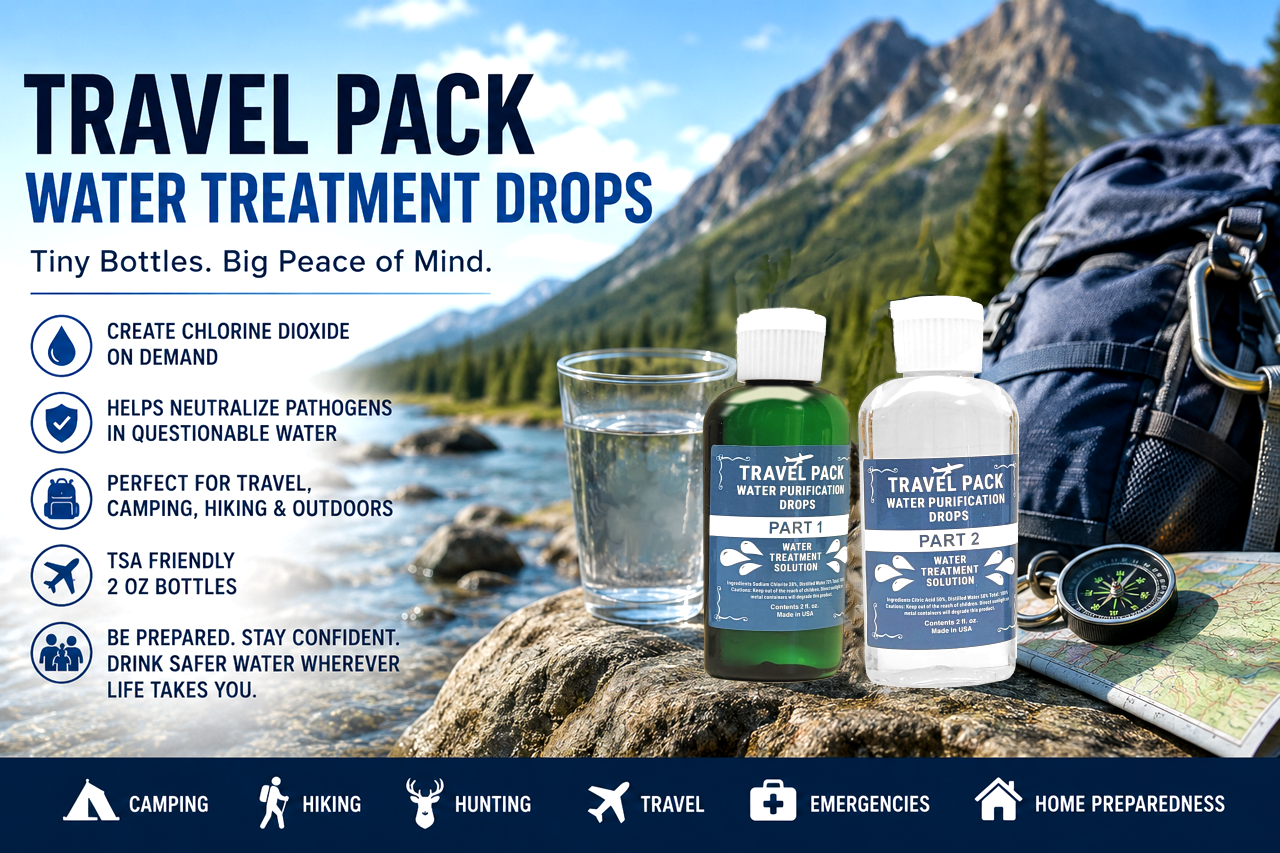
Travel Pack Water Treatment Drops are a compact two-part water purification system designed to generate chlorine dioxide on demand. Commonly sold as water purification water treatment drops, these travel-sized kits are popular among campers, hikers, hunters, outdoor enthusiasts, preparedness-minded families, and international travelers.

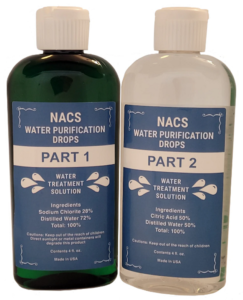
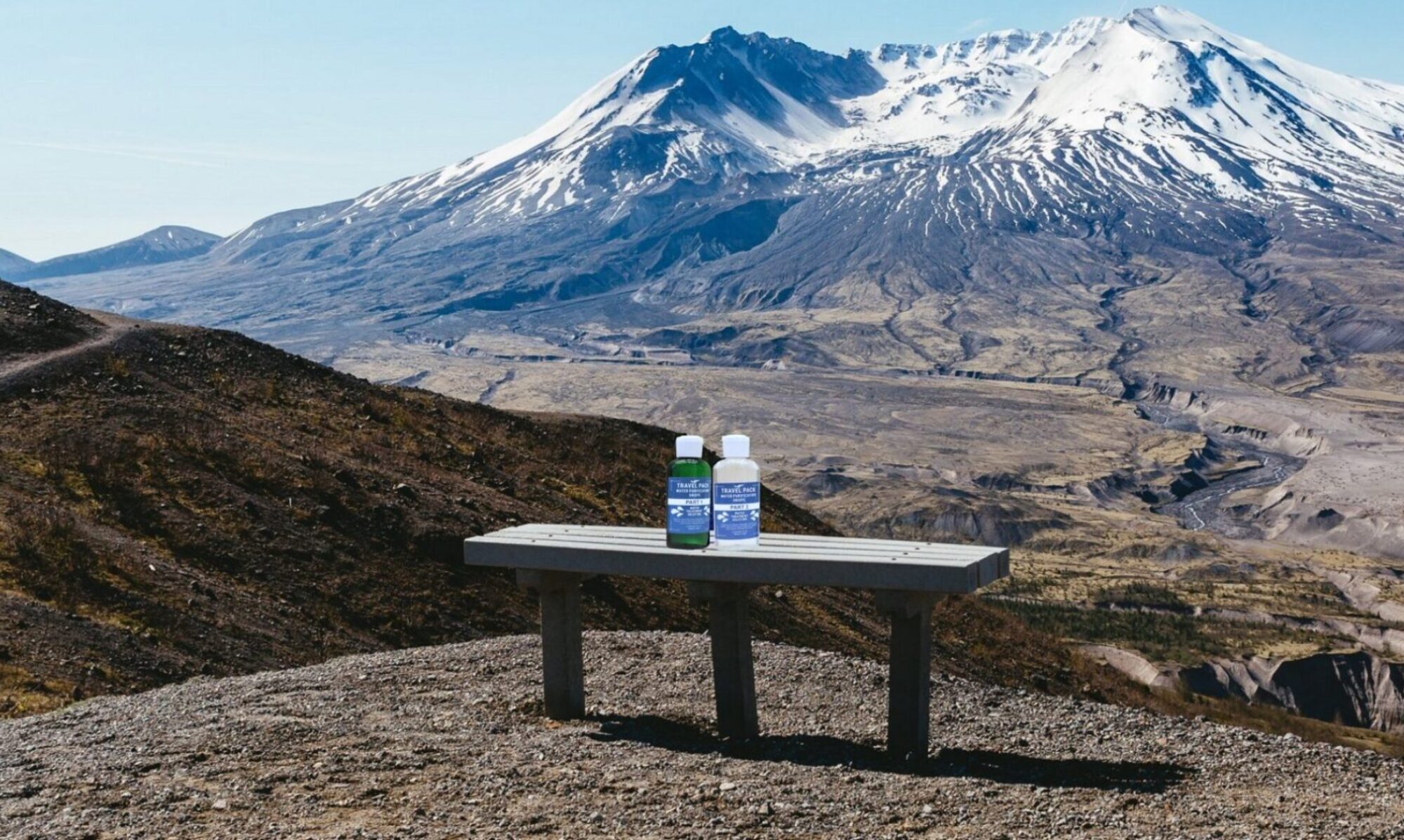
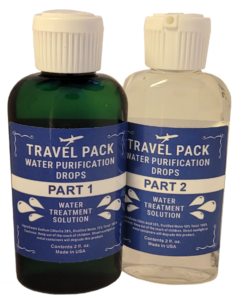
The kits are often packaged in small bottles—commonly around 2 ounces each—which makes them easy to store and convenient for travel. One bottle contains Part 1, the second contains Part 2, and when combined according to product directions, they create chlorine dioxide for water treatment.

The idea is simple: You may not always control where your water comes from—but you can often control how you prepare it.

Why Chlorine Dioxide for Water Purification?

Water can appear perfectly clean and still contain unwanted microorganisms. Streams, standing water, rural sources, emergency storage, unfamiliar municipal systems, and travel destinations may all introduce variables that visitors are not accustomed to.

Chlorine dioxide has become well known in water treatment because of its ability to neutralize many common waterborne pathogens and reduce contamination concerns when used properly according to directions.

Unlike carrying gallons of bottled water, treatment drops take almost no space. That means preparedness without bulk.
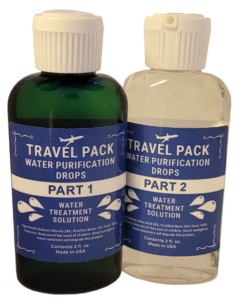
Chlorine Dioxide Travel Pack

Campers and Outdoor Recreation

Outdoor recreation often means leaving modern infrastructure behind. For many people, that’s the whole point. But beautiful water isn’t always treated water.
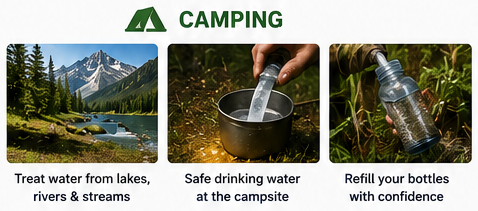
Weekend Mountain Camping

You set up camp beside a crystal-clear alpine stream.

The water looks perfect.

Yet wildlife activity upstream means contamination remains possible.

A camper treats collected water according to instructions and stores safe drinking water for cooking, hydration, and coffee at sunrise.

Extended Backpacking

A hiker carrying ultralight gear cannot carry enough bottled water for several days.

Instead, water is gathered periodically and treated before drinking.

Family Campground Overflow

A campground experiences temporary boil-water advisories after heavy rain.

Families who brought purification supplies continue their trip with less disruption.

Hunters, Sportsmen, and Remote Workers

People who spend long hours away from facilities often value lightweight preparedness.
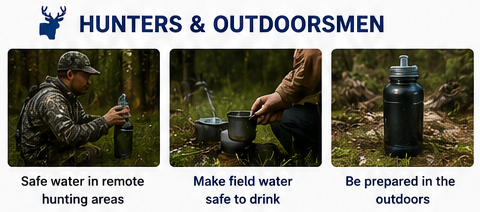
All-Day Hunting Trip

A hunter reaches a remote location farther than expected and runs low on water.

Nearby standing water becomes usable after appropriate treatment.

Field Photography Expedition

Nature photographers working all day away from facilities keep treatment drops as backup.

Off-Road Recreation

Outdoor riders exploring remote terrain use water treatment as part of emergency readiness.

International Travelers

One of the most overlooked travel concerns is water adaptation.

Locals may have developed tolerance or familiarity with regional water systems, while visitors may react differently.

Travelers often take responsibility for food and water decisions before problems begin.
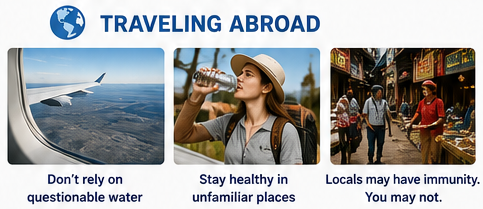
International Tourism

A traveler visits a destination where bottled water availability becomes inconsistent.

Treatment supplies offer an additional layer of preparedness.

Rural Village Visit

A volunteer or humanitarian traveler receives hospitality in a remote area and prepares drinking water according to instructions.

Unexpected Transit Delay

Airport delays, long bus transfers, and temporary infrastructure issues create situations where backup water treatment becomes valuable.

Emergency Preparedness and Home Backup

Many people keep emergency food. Fewer think about water.

Preparedness experts often note that water interruptions happen more frequently than people expect.
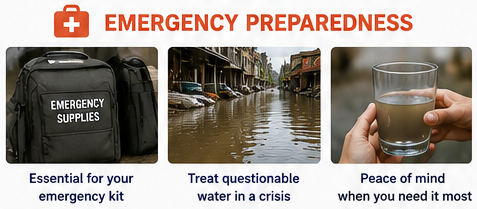
Storm Response

Heavy weather interrupts local water access.

Stored containers can be prepared for use.

Utility Advisory

Residents receive notice to temporarily treat water before consumption.

Vehicle Emergency Kit

A compact travel pack lives inside an emergency tote, ready when needed.

Everyday Preparedness

Not every use case is dramatic. Sometimes preparedness simply means confidence.

Road Trips

Traveling through unfamiliar areas with uncertain stops.

Outdoor Events

Long events where hydration access becomes unpredictable.

Extra Household Security

Keeping supplies available for unexpected circumstances.

Chlorine Dioxide for Humans Book

Small Enough to Carry. Big Enough to Matter.

Water purification isn’t about fear.

It’s about options.

For decades, people who spend time outdoors—or far from familiar systems—have carried compact treatment methods because water access can change quickly.

Travel Pack Water Treatment Drops provide a lightweight way to prepare for those moments.

No drama.

No panic.

Just one more practical tool that helps people take responsibility for their own wellbeing wherever life leads.
 

Why Travelers Carry Chlorine Dioxide for Safe Drinking Water

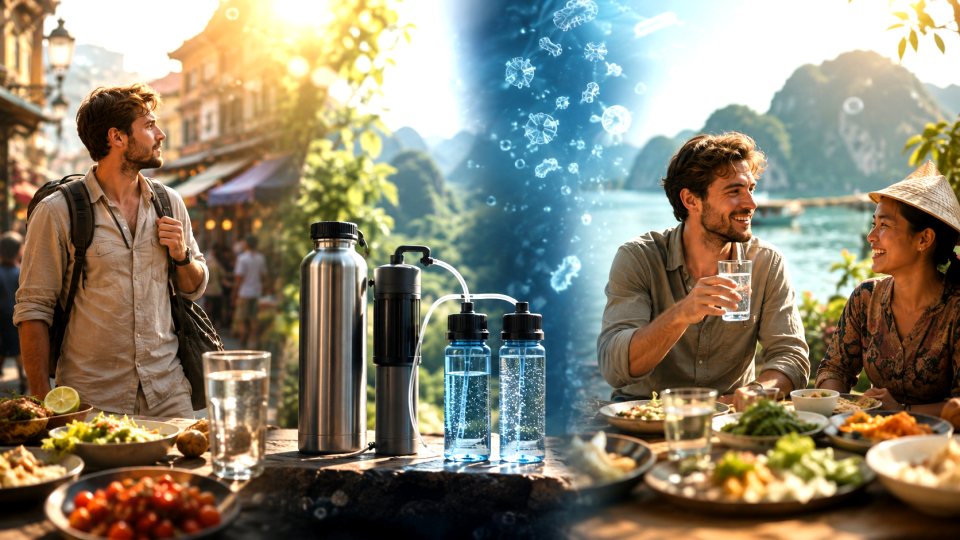
One of the most overlooked parts of travel is not transportation. It is not passports. It is not hotels. It is not language barriers. It is water. Most people assume that because water appears clear, it must be safe. But experienced travelers eventually learn something surprising: Water can be perfectly normal for the local population and still create problems for visitors. Not because the water is necessarily unsafe. But because your body may not be accustomed to it.

Why Travelers Sometimes React to Local Water

People often say things like: “The locals drink it every day.” That may be true.

But local populations may have years, or generations, of adaptation to:

    • regional microbes
    • local mineral profiles
    • environmental organisms
    • food preparation methods
    • background microbial exposure

Visitors arrive without that adaptation. Their digestive systems encounter a completely different environment overnight. This is why travel-related digestive upset remains one of the most common complaints among international travelers.

Travel Exposure Is Bigger Than Drinking Water

When people think of questionable water, they imagine drinking from rivers.

But exposure happens in many unexpected ways:

    • ice cubes
    • fresh produce rinsed in local water
    • brushing teeth
    • salads
    • juices
    • coffee
    • tea
    • shower exposure
    • street food
    • uncooked foods
    • beverages diluted with local water

Even small repeated exposures may add up.

The Organisms Travelers Often Worry About

Water and food exposure discussions frequently include organisms such as:

Common Waterborne Concerns

    • Giardia
    • Cryptosporidium
    • E. coli
    • Salmonella
    • Campylobacter
    • Shigella
    • Norovirus
    • Hepatitis-related concerns
    • General protozoa
    • Environmental microbial exposure

Not every destination presents the same risks. But travelers often prepare anyway.

Why Chlorine Dioxide Became the Traveler’s Favorite

For decades, travelers had limited choices.

They could:

    • boil water
    • carry filters
    • use iodine
    • use chlorine tablets
    • buy bottled water

Each works in certain situations. But chlorine dioxide gained a loyal following because it solved several problems simultaneously.

Travelers liked that it was:

    • lightweight
    • inexpensive
    • compact
    • long shelf-life when unmixed
    • activated on demand
    • effective in many water purification situations
    • practical internationally

Most importantly: You carry tiny bottles. You create the purifier only when needed.

2-Part Chlorine Dioxide Kit

Why Two-Part Systems Are So Appealing

Most chlorine dioxide travel kits work by combining:

    • Part 1
    • Part 2

After activation, chlorine dioxide forms and is added to water.

This gives travelers several advantages:

Travel Benefits

    • no bulky filtration equipment
    • easy packing
    • TSA-friendly travel sizes available from some manufacturers
    • small enough for a pocket
    • no batteries
    • no pumping
    • no electricity

For many travelers, this simplicity becomes addictive.

Why Travelers Often Prefer It Over Bottled Water

This surprises people. Many experienced travelers report that bottled water solves less than expected. Because bottled water:

    • costs more
    • creates plastic waste
    • may not always be available
    • sometimes has uncertain storage history
    • does not help with produce, ice, or food preparation

Portable purification gives flexibility.

The Psychological Benefit Nobody Talks About

One unexpected benefit is peace of mind. Travel changes when water stops being a constant concern. Instead of asking: “Can I drink this?” People begin asking: “How do I enjoy this place?” That shift changes the experience.

A Traveler’s Water Mindset

Experienced travelers often think in layers:

Layer 1 — Choose Better Sources

    • sealed beverages
    • cleaner establishments
    • flowing vs stagnant water

Layer 2 — Reduce Exposure

    • avoid unnecessary raw foods
    • use caution with ice
    • wash strategically

Layer 3 — Prepare

    • carry purification options
    • have backup plans
    • know contact times

Preparedness usually matters more than perfection.

Travel Is About Adaptation

One of the beautiful things about travel is that it expands us.

We experience:

    • new foods
    • new climates
    • new ecosystems
    • new cultures
    • new environments

But every environment has its own biological fingerprint. Travelers do not need to fear that. They simply need to respect it.

Why Chlorine Dioxide Continues Growing in Popularity

Travelers continue choosing chlorine dioxide because it occupies a unique space: Too small to notice in your bag. Too useful to leave behind. It became popular not because travelers expect the worst. But because they want freedom.

Freedom to travel farther. Freedom to worry less. Freedom to drink with greater confidence.

That may explain why chlorine dioxide remains one of the most recognized portable water purification options among international travelers, hikers, emergency planners, and adventure communities.

Chlorine Dioxide for Humans Book

Most travel problems do not begin with dramatic emergencies. They begin quietly. One meal. One drink. One cup of ice. One unfamiliar environment.

Travel does not require fear. It requires preparation. And for many travelers, carrying a compact water purification option has become as normal as carrying a passport. Because sometimes the difference between an unforgettable trip and a miserable one begins with something as simple as clean water.

FAQ

Q: Why do travelers use chlorine dioxide water purification drops?
A: Many travelers value them because they are lightweight, compact, shelf-stable, and used for water purification.

Q: Is bottled water always safer abroad?
A: Not necessarily. Travelers often also think about ice, produce washing, and preparation methods.

Q: What organisms are travelers concerned about?
A: Travel discussions commonly mention organisms such as Giardia, Cryptosporidium, E. coli, and other waterborne concerns.

Q: Are water purification drops better than filters?
A: Different methods solve different problems. Many travelers layer filtration and disinfection depending on conditions.

Q: Can chlorine dioxide remove chemicals or heavy metals?
A: No. Chemical disinfection and filtration address different categories of contaminants.


Disclaimer

This article is for educational purposes only. Chlorine dioxide is widely used for water purification and sanitation applications. Always follow manufacturer instructions and local travel guidance regarding drinking water safety. Water purification methods vary in effectiveness depending on water quality and contamination type. Chemical disinfection does not remove sediment, chemical pollutants, heavy metals, or all contaminants.


Using Chlorine Dioxide as Water Treatment Drops In the Field

Ensuring water safety is crucial when visiting places with unknown water quality, such as remote camping sites, hiking areas, or foreign countries. Drinking or using contaminated water for cooking, food preparation, and personal hygiene can lead to illnesses like diarrhea, vomiting, and stomach pain. Treating such symptoms without access to medical care or while traveling can be challenging.

Water contamination is more common in areas lacking sanitation or water treatment infrastructure, like campgrounds, remote regions, or certain foreign destinations. Notably, contaminated water may appear clean, underscoring the importance of knowing the water source, its treatment process, and safety before consumption. While bottled water can be a convenient option, it’s essential to be aware of its origin and treatment, especially in remote locations.

Some individuals, such as young children, pregnant women, older adults, and those with weakened immune systems, are more susceptible to infections from exposure to contaminated water. To combat waterborne germs effectively, chlorine dioxide water purification drops can be employed, particularly against resistant organisms like Cryptosporidium and Giardia parasites, following the manufacturer’s instructions carefully.

Pathogens found in contaminated water include:

    • Protozoa, such as Cryptosporidium and Giardia, are increasingly widespread in North America.
    • Bacteria are present worldwide, with some causing illnesses like diarrhea and dysentery.
    • Viruses, which cause diseases like hepatitis and polio, are smaller than bacteria or protozoa.

Chlorine dioxide water purification drops also combat viruses, offering protection against viruses like hepatitis A, rotavirus, norovirus, and others which might not be effectively filtered by most systems in less-developed areas.

Practicing good hygiene, like handwashing with soap and water before handling food, eating, and after using the toilet, is crucial when traveling. If water isn’t readily available, using a hand sanitizer with at least 60% alcohol is recommended.

Chlorine dioxide water treatment drops are highly beneficial for various scenarios, including emergency kits, international travel, rural areas, and outdoor activities, as well as preserving stored water. A single kit of these drops can treat up to 120 gallons of water.

The chlorine dioxide water treatment drops come in a two-part chemical kit. Part 1 contains a 22.4% sodium chlorite solution, while Part 2 comprises a 50% citric acid solution. When combined, they form the water purifier (chlorine dioxide), resulting in a yellowish-brown color after 30 seconds of activation. Once activated, the solution can be added to a water bottle, and after waiting for 7 minutes, the water is ready to drink. Longer wait times are necessary for cold water, turbid water, or to inactivate cryptosporidium cysts.

Chlorine dioxide is highly effective against Giardia and Cryptosporidium. When dealing with suspected contamination of Cryptosporidium, it is recommended to let the water sit for 30 minutes before consumption. By following proper water purification procedures, we can safeguard our health and well-being during our travels and adventures.